
Homes, crawl spaces and shops along Wheeler Lake
Spray Foam Insulation in Decatur, AL
Cooler upstairs rooms, drier crawl spaces and lower summer bills, with every area priced in writing before work starts.
- Free on-site estimates
- Written quote naming the material, thickness and R-value for each area
- Crawl space moisture and attic air leaks checked before we price
Insulating for a Tennessee Valley Summer
Spray foam insulation in Decatur is mostly about summer. The city's 1991-2020 climate normals on Wikipedia show July afternoons averaging 89.8F, the all-time record is 108F, and the area takes in close to 50 inches of rain a year. That heat and moisture push into houses through leaky attics and open crawl spaces for six months or more. We seal those leaks and insulate the spaces that need it, using open-cell or closed-cell spray foam where it fits and blown-in insulation where it does the job for less. Winters still bite now and then: Decatur's January nights average right at freezing and the record low is -19F, so the same air sealing that keeps a house cool in July keeps the floors warmer in January.
What the code asks for here
Alabama adopted the 2015 International Energy Conservation Code, with state amendments, on October 1, 2016. Summaries of that amended code (Southface's Alabama field guide and the Insulation Institute) list these Climate Zone 3 targets: R-30 in ceilings, R-20 or R-13 plus R-5 continuous in wood-frame walls, R-19 in floors, and R-13 or R-5 continuous on crawl space walls. ENERGY STAR goes further for existing homes in Zone 3: R-49 in an attic that has no insulation, or an added R-38 where 3 to 4 inches are already down. Many older Decatur attics sit well below either number.
The houses we see in Decatur
Decatur began as Rhodes Ferry Landing on the Tennessee River in the early 1800s and is known as the River City. It holds the largest Victorian-era home district in Alabama, but most of its houses are much newer. Census figures summarized by Point2Homes put the median build year at 1977, with about 37% of homes built in the 1960s and 1970s and close to 70% of all units being detached single-family houses. That means a lot of brick ranches and split-levels with vented crawl spaces, attic ductwork and insulation that has settled or been disturbed by decades of cable, HVAC and pest work.
In those homes the common problems are predictable. The attic floor has gaps around the attic hatch, can lights, bath fans and plumbing stacks, so hot attic air leaks into the rooms below. The crawl space is vented to the outside, so humid summer air meets cool ductwork and floor framing and leaves water behind. Fiberglass batts under the floor get wet, sag and fall. Fixing those three things usually changes how a house feels more than any single other project.
Closed cell vs open cell foam
Open-cell foam is soft and light. It expands a lot, fills odd-shaped cavities and stops air well, and HomeGuide lists it at R-3.5 to R-3.7 per inch. Water vapor can move through it. Closed-cell foam is rigid and dense, rated R-5 to R-7 per inch by HomeGuide, and at normal thickness it acts as a vapor retarder and shrugs off water. In a humid climate those differences matter. Closed-cell is the usual choice on crawl space walls, rim joists, the underside of floors over damp ground, and metal buildings. Open-cell is often used on the underside of a roof deck to create a sealed, conditioned attic, in interior walls for sound, and in above-grade cavities.
Foam is not always the answer. On a wide open attic floor, sealing the gaps and then blowing cellulose or fiberglass to depth usually reaches the target R-value for less money. We say so when that is the case.
Spray foam insulation cost
HomeGuide's 2026 cost guide puts installed spray foam at $1.50 to $5.00 per square foot, with open-cell at $1.50 to $3.50 and closed-cell at $3.00 to $5.00. It lists an attic at $3,000 to $8,000, a crawl space at $2,000 to $4,000 and a whole house at $8,000 to $20,000, and notes that many installers carry a minimum of $1,000 to $2,000 or more. For crawl space encapsulation, HomeGuide's range is $3 to $10 per square foot. These national numbers help you plan, but access, foam type, thickness and how much old material has to come out decide the real figure. The written estimate we give you after the visit is the price.
Questions to ask insulation contractors
When you compare spray foam insulation contractors or insulation companies around Decatur, a few questions show who has thought about your house. Ask what gets sealed before anything is insulated. Ask which foam they plan for each area and why, and what thickness and R-value the quote shows. Ask how they will handle moisture in the crawl space, whether ducts in the attic will end up inside or outside the insulated space, and how long you need to stay out after spraying (HomeGuide advises at least 24 hours). Ask for the price broken out area by area. Our written quotes cover all of that.
Rebates worth checking
TVA's EnergyRight program lists rebates of up to $300 each for attic insulation, wall insulation, envelope air sealing, and duct sealing and insulation. The program requires the work to be done by a member of TVA's Quality Contractor Network, and the contractor files the rebate request. Check the current EnergyRight terms and ask any installer whether the job will qualify before you count on the money.
Shops, barns and metal buildings
Morgan, Limestone and Lawrence counties have a lot of acreage, and with it a lot of steel shops, pole barns and detached garages. Bare metal heats up fast in summer and drips condensation when warm, humid air touches cold steel in winter. Closed-cell foam on the roof and wall panels insulates and stops that drip in one pass, which is why it is the common choice for buildings people want to work in year-round.
What We Do
Six kinds of work, matched area by area to your house or building, from foam on a crawl space wall to hauling out tired attic insulation.
Spray Foam Insulation
Open-cell and closed-cell foam that insulates and seals air in one layer, for attics, crawl spaces, walls and metal buildings.
Learn more →Crawl Space Encapsulation & Insulation
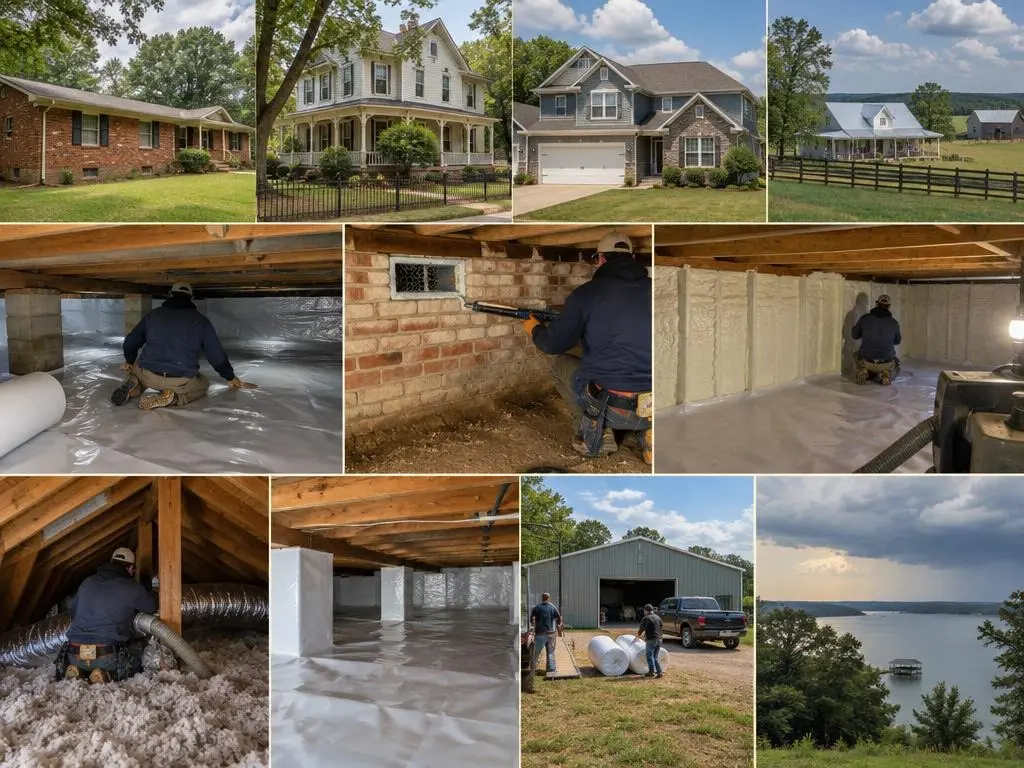
Vapor barrier, sealed vents and insulated walls or floors to dry out a damp, musty crawl space.
Learn more →Attic Insulation & Air Sealing
Seal the ceiling leaks that let hot attic air in, then bring the attic up to Zone 3 depth.
Learn more →Metal Building & Shop Insulation
Closed-cell foam for steel shops, pole barns and garages that stops condensation and holds a temperature.
Learn more →Blown-In Insulation
Loose-fill cellulose or fiberglass blown to depth in attics and dense-packed into closed walls.
Learn more →Insulation Removal & Replacement
Vacuuming out wet, rodent-soiled or failed insulation, then reinsulating the space properly.
Learn more →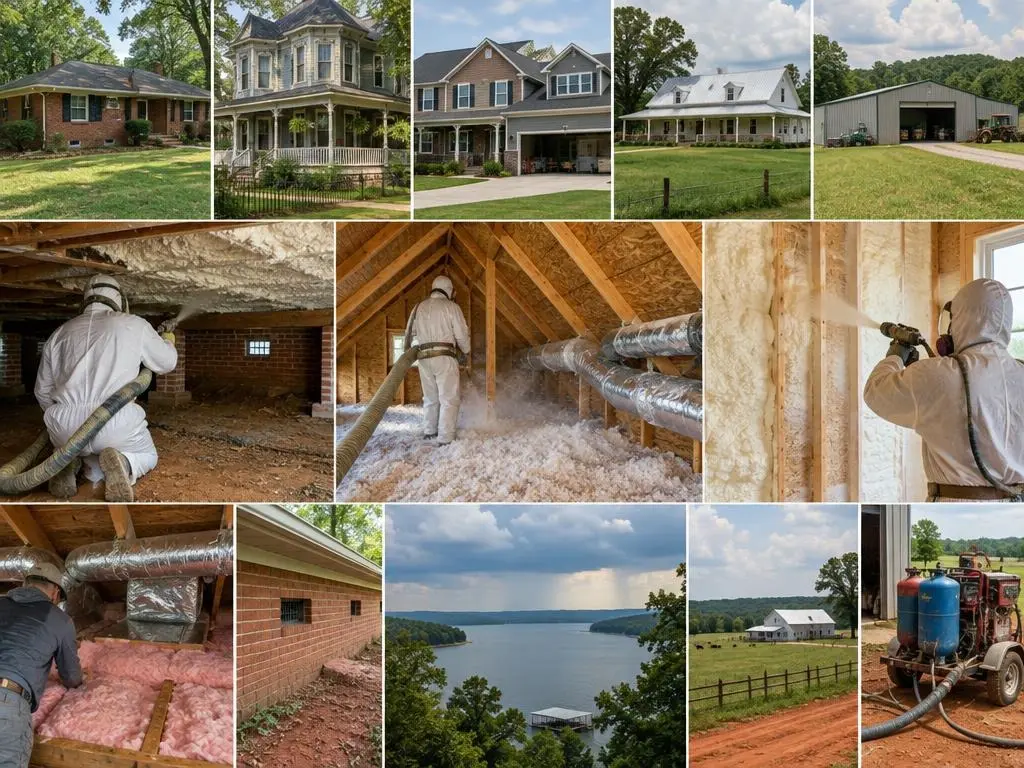
Why Homeowners Call Spray Foam Insulation Decatur
We look before we price
Every quote follows a visit to the attic, crawl space or building, not a phone guess.
Moisture comes first
Wet crawl spaces, leaks and damp framing get flagged and dealt with before anything is sealed in.
The right material per area
Closed-cell, open-cell, cellulose or fiberglass, chosen for the surface and the humidity, with the reason written down.
Quotes you can compare
Each area lists material, thickness or depth, R-value and price.
Towns We Cover Around Decatur
We work in Decatur and across the Tennessee Valley: Hartselle, Priceville, Somerville, Trinity and Falkville in Morgan County; Athens, Mooresville and Tanner in Limestone County; Madison and Huntsville across the river; and Moulton, Courtland and Town Creek in Lawrence County. Older river towns like Mooresville and Courtland hold 1800s houses with their own quirks. Suburbs like Madison and Priceville have newer homes with attic ductwork and bonus rooms. The farm country to the west and south has more shops and metal buildings. Each town page covers what stands out there.
- Spray Foam Insulation in Decatur, AL
- Spray Foam Insulation in Hartselle, AL
- Spray Foam Insulation in Priceville, AL
- Spray Foam Insulation in Trinity, AL
- Spray Foam Insulation in Somerville, AL
- Spray Foam Insulation in Falkville, AL
- Spray Foam Insulation in Athens, AL
- Spray Foam Insulation in Mooresville, AL
- Spray Foam Insulation in Tanner, AL
- Spray Foam Insulation in Madison, AL
- Spray Foam Insulation in Huntsville, AL
- Spray Foam Insulation in Moulton, AL
- Spray Foam Insulation in Courtland, AL
- Spray Foam Insulation in Town Creek, AL
Common Questions
How much should I expect to pay for spray foam insulation?
HomeGuide's 2026 figures put installed spray foam at $1.50 to $5.00 per square foot, with open-cell at the low end and closed-cell at the high end. An attic runs $3,000 to $8,000 and a crawl space $2,000 to $4,000 in that guide. Access, thickness and removal change the total, and the written estimate after our visit is the price.
Why is spray foam insulation now a red flag for some buyers?
Most of the worry comes from poor installs: foam sprayed too thick in one pass, foam that covered a roof leak, or a sealed attic that was not planned with the HVAC system in mind. Lenders and inspectors also sometimes ask questions about foam on the roof deck because it hides the sheathing. A careful plan, the right thickness, and paperwork showing what was installed answer most of those concerns.
Is there a downside to spray foam insulation?
It costs more per square foot than fiberglass or cellulose, it is hard to remove once cured, and it needs the household out for about a day while it cures. It also seals a space so well that ventilation and moisture have to be thought through. Where those trade-offs do not pay off, we recommend blown-in or batts instead.
Why are people removing spray foam insulation?
Usually because it was put in the wrong place or the wrong way: over a leak, too thick, mixed badly, or in a way that hid damage a buyer's inspector wanted to see. Removal costs $1.00 to $2.50 per square foot in HomeGuide's guide. Getting the plan right the first time is much cheaper.
What R-value should a Decatur attic have?
Alabama's code summary lists R-30 for ceilings in Climate Zone 3. ENERGY STAR recommends R-49 for an uninsulated Zone 3 attic and an added R-38 if 3 to 4 inches are already there. We measure what you have and quote the depth needed to reach the target.
Should I encapsulate my crawl space or just insulate it?
If the crawl space is damp, musty or has standing water, insulation alone will not last. A sealed vapor barrier, closed vents and sometimes drainage or a dehumidifier come first, and then the walls or floor get insulated. If the space is dry, insulating the floor above may be enough. We look and lay out both options.
Get a Written Insulation Quote in Decatur
We come out, check the attic and crawl space, and send a written price with the material and R-value for every area.